
Notes on London
On Patriotism, Hegemony and Identity down the Old Smoke.

London has now become almost like a gigantic frog! With its long tongue it draws curious insects from all over the world inside itself!" - William Shakespeare
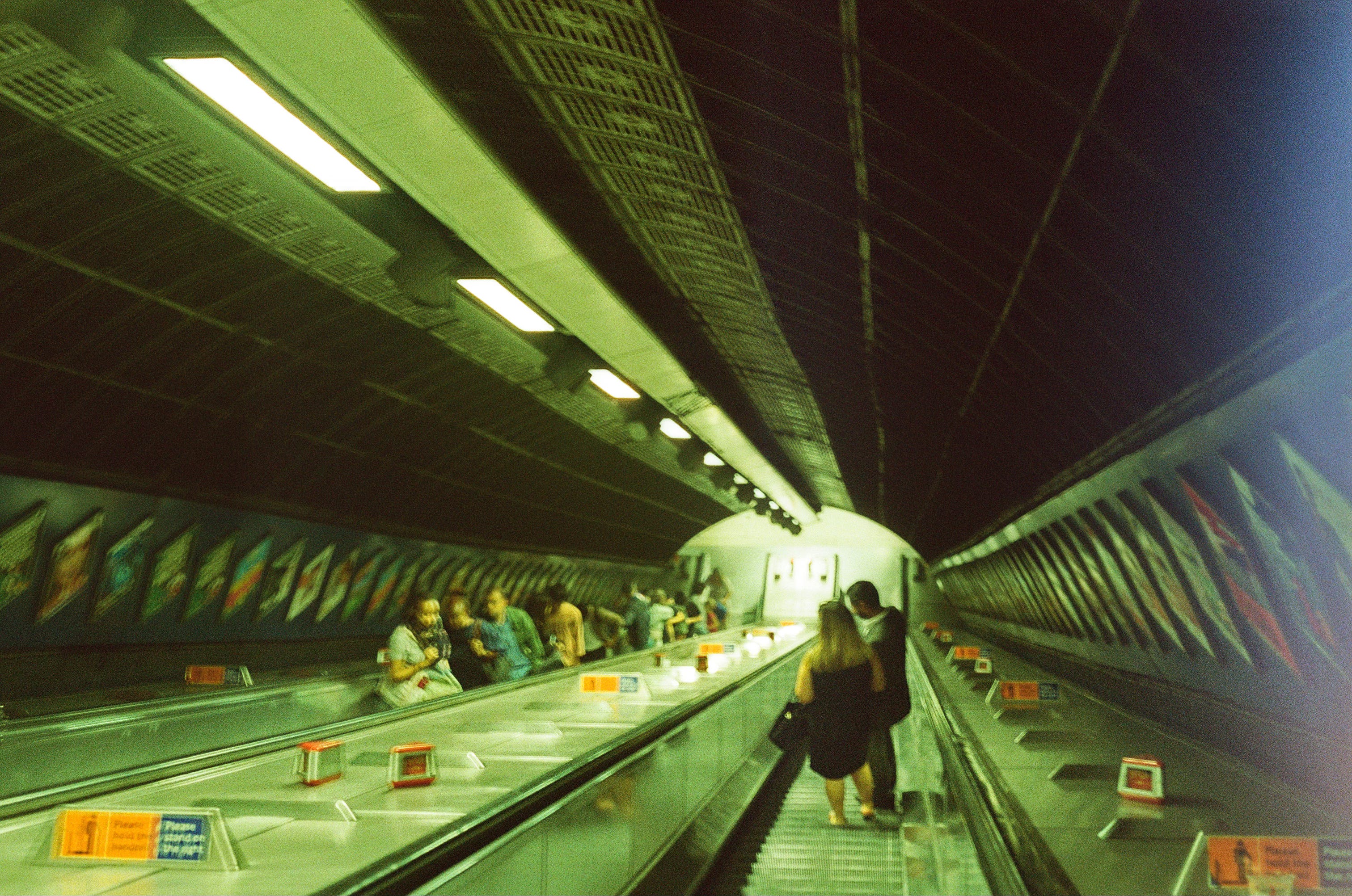
‘I love being an ant’, or so, uttered the birthday boy. Having been cooped up on an increasingly populated train, before escaping the stampede of Euston, only to burrow deep underground in search of the Northern Line and to surface again at London Bridge - quite literally running out of the shade into the sun; I felt like an ant alright. I’d only travelled and stayed in London twice before - once, when I was about eight years old in 2012 and a second time, when I travelled to Shoreditch to see my first short film screened at a London festival, before travelling via Gatwick to Malaga, for a matter of hours in 2023. And so, my experiences of the Old Smoke were either lost in time and memory or limited to an area inside Hackney often compared with Manchester’s Northern Quarter. Until now of course.
‘That building looks like a shard’ I remarked , as we turned and entered Borough Market. Green poles of painted wood and beams of steel lift this tent of overpriced, steaming produce into a realm of cultural significance - it almost resembles a train station, though perhaps more a wider hub of the world. Cheeses that pong of elderberries converge with thick Cumberlands that would make any man self-conscious - shouting salesman and their exchanging echoes make conversation nigh on impossible, but how could you possibly stop to chat? A plethora of glimpses and faces swirl around you each heading in a different and separate direction, in a cultural moment where the tourist and the resident are a face gradually blurring. Akin to ants in a colony, to be unique is a feat. Perhaps except for me, with my relatively mild accent and colloquialisms sticking out like… well, a Scouser in Knightsbridge. I’d argue defining the culture of modern Liverpool is easy enough, though whether such is a positive reflection or a negative stereotype is another matter entirely. London is more of a mystery to me. Of course the vast difference between half a million and eight million people - or between one hundred million square miles, and one and a half billion - cannot be ignored, nor can my relatively small sample size of just thirty four hours and three boroughs. However, a question permeated over my trip to the British Capital - just how can one define London identity?
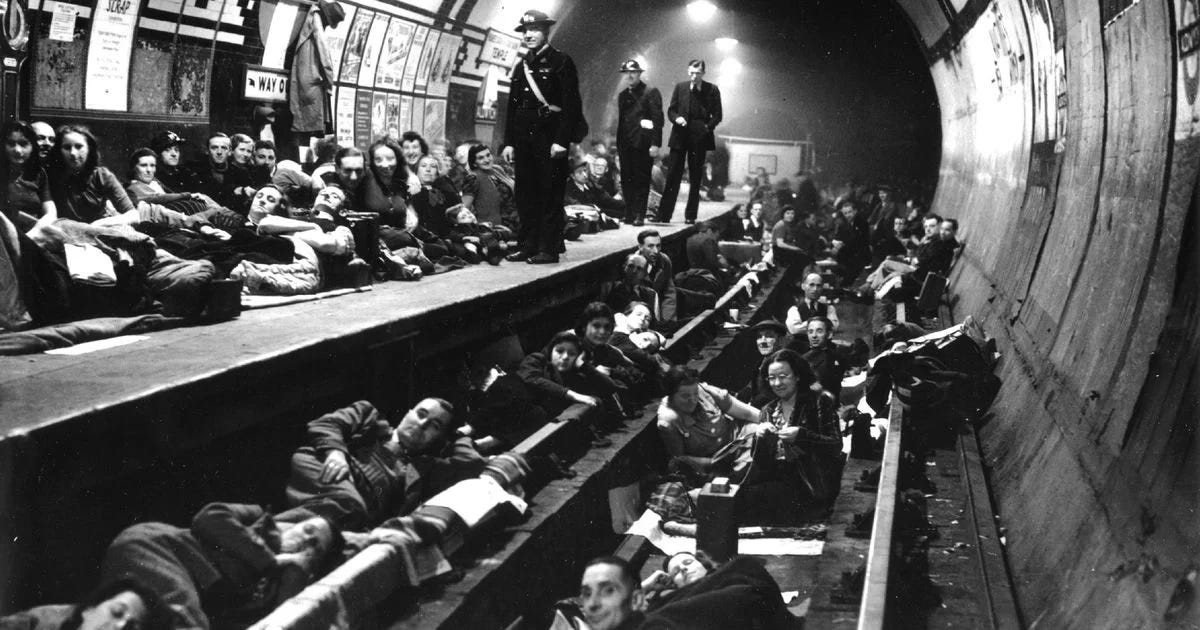
It crossed my mind whilst waiting for ‘the tube’ just how cramped and deep it all is. Somehow, I thought back to the Blitz. Men, women and children stacked like sardines on the rail itself, as if part of Philippa Foot’s Trolly Problem. People died despite their distance from the surface, but a train never came. These days, it’s just as crowded. I don’t mind standing, in fact it’s optimal when a destination is only a few stops away, but it’s not like there’s much of a choice. It’s in moments like such that I’m actually quite glad of my banal average height, which illustrates me as a giant bearing down on the seated but not tall enough to bang my head on the low roof of the tube. However, I guess the significant decision is that between train and trek.
Frankly, London is not walkable, though neither is the equivalent distance between Liverpool and Manchester so all is forgiven. Hence, for my second day in the nation’s capital, my preference to walk limited my travels to just Holborn, Westminster and Covent Garden. Our plan was as follows; to arise from our hostel bed - yes, a hostel, I’m not made of money you know - and head to a breakfast place just round the corner at 8pm. From there, we’d begin walking to the Palace of Westminster, passing Trafalgar Square and saying hello to Keir Starmer at Downing Street along the way. The towering ‘Big Ben’ is quite unmissable and the whole ordeal is unmistakably British, or so I thought. Through inspecting the statues of Parliament Square Garden, in which Lord Palmerston and Robert Peel coexist alongside Mahatma Gandhi and Abraham Lincoln, my original question of defining London identity expanded its horizon - what can one argue is modern British identity? Of course the remnants of British colonialism are still experienced all over the world, since it’s inception in the early 1600s, with the period beginning from the defeat of Napoleon and ending upon the silence of the Western Front divisively seen as either the glory period of British history, or our great shame. As with most things in life, it’s actually a bit of both.
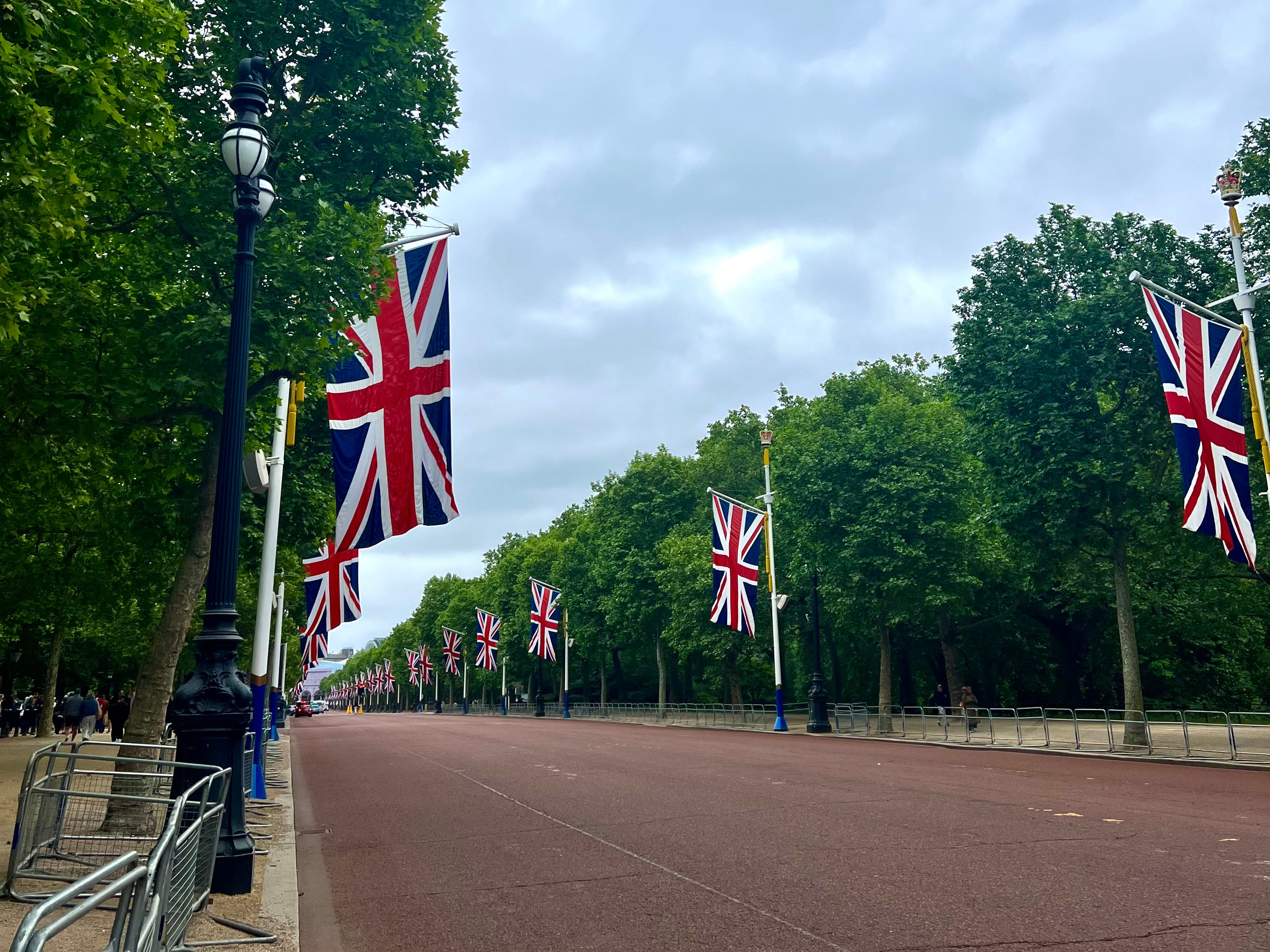
From just the perspective of London however, I sensed a great underbelly of patriotism in the capital. On from Westminster, and towards Buckingham Palace, we ventured along Birdcage Walk, entirely closed off from cars and with barriers restricting pedestrians from crossing the road. In its place, a marching band of hundreds rehearsing with an intoxicating tune, as the procession paraded before beautiful, tall terrace houses and decorative lime trees that shield the street from the sun. Soldiers armed to the teeth wore tall fur bearskin caps whilst a suited orchestra of golden brass followed behind. It passed us and we continued on through St James’s Park, but we could still hear it all the while. I’d seen the Royal residency before, it was a glorified tourist trap then and still is now, but that’s not what caught my eye. Along The Mall, a terrible name for such a majestic stretch of road, are countless Union Jacks that turn gravel into grandeur. My friend and I attempted to count every flag we saw in the short radius of which we walked. At this point, we were close to the seventy mark, and it was only two in the afternoon.
The British Museum was the last stop on our whirlwind tour, the last of any particular note that is. The National Art Gallery, and lunch at Pizza Express, was enjoyed by all, though not particularly reflective in writing this piece. Conveniently, a story has broken today in an exclusive by The Critic which suggests that Museum Chairman George Osborne, Cameron’s Chancellor until he was sacked by May in 2016, has agreed to give the Elgin Marbles to Greece in a ‘permanent loan of the artefacts’. The Marbles left a lasting impression on me during my visit, but I mention this article not out of an emotive anger of their removal but more through intrigue of how the British Museum reflects Britain’s historical and contemporary place in the world, how this is gradually changing, and perhaps for good cause on either side of the political aisle. Though of course, for different reasoning. My experience and initial thought of the Museum was that its name was misleading. Its rooms are decorated with artefacts from Africa, from Ancient Rome and Greece, from Egypt, India, China and even Assyria. Nothing of Britain. The Reading Room, at the centre of the building and atop the spiralling staircase, boasts of visits from Karl Marx, Vladimir Lenin and Sun Yat-Sen. Here, we did not add to our flag count.
Not that there’s anything wrong with that! Though isn’t it rather fascinating that the British Museum does not pertain to Britain but rather the world and almost everywhere the Empire once touched; does it not insinuate through it’s exhibitions and countless rooms, that if the British Museum is rather the World Museum, then is Britain the centre of the world and all of its history? George Osborne apparently doesn’t think so. Nor would the liberal left, in their obvious anti-colonialism, but so too, the modern British right. Akin to 2016, when Osborne left his post, immigration is still the leading issue in the minds of the British electorate, and though at first glance such would seem to be a ‘frustration with everything foreign’, I’d argue the current political psychology surrounding the issue is more an annoyance at the ignorance of Britishness, which is increasingly difficult to nail down and diluted by less the legal status of migrants but rather the lack of integration. Whilst the left is caught in a paradox of representation and appropriation, the demands from the other half of the horseshoe could not be simpler and there’s no surprise that such a demand comes not from the metropolis of London, but rather the tight-knit rural vote currently under a reforming illusion.
I don’t mean to be a prescriptivist, rather just to describe as I closed out my day with overpriced but nonetheless delicious fish and chips. We had under an hour until our train appeared at Euston, and what better for tea than this staple of our national cuisine. If only it was wrapped in newspaper. An internal question underpinned this trip for me, as I attempted to view London without bias or prejudice. Could I call this city my home? I’d lived like the tourist I was in the last thirty four hours. The only difference between myself and a Chinese guided tour group, was that I didn’t have my passport in my bag. We caught a commuter train out of London, out of necessity rather than choice. It was a sobering experience, to be half an hour early for a train and still have to stand. Our spirits were high and mighty despite not a spare seat in sight, to the complete contrary of every other man and woman on the train sat or stood. In their eyes, a tiredness one rarely sees from… yes, a lack of sleep but also through frustration with the early mornings into the city and the late evenings getting home. And that’s if their eyes were open at all, others had succumbed to sleep before the train had even left. Shovelling to survive and surviving to shovel. Only the train moved, everything else was still. I could not live in London or at least, not like this.
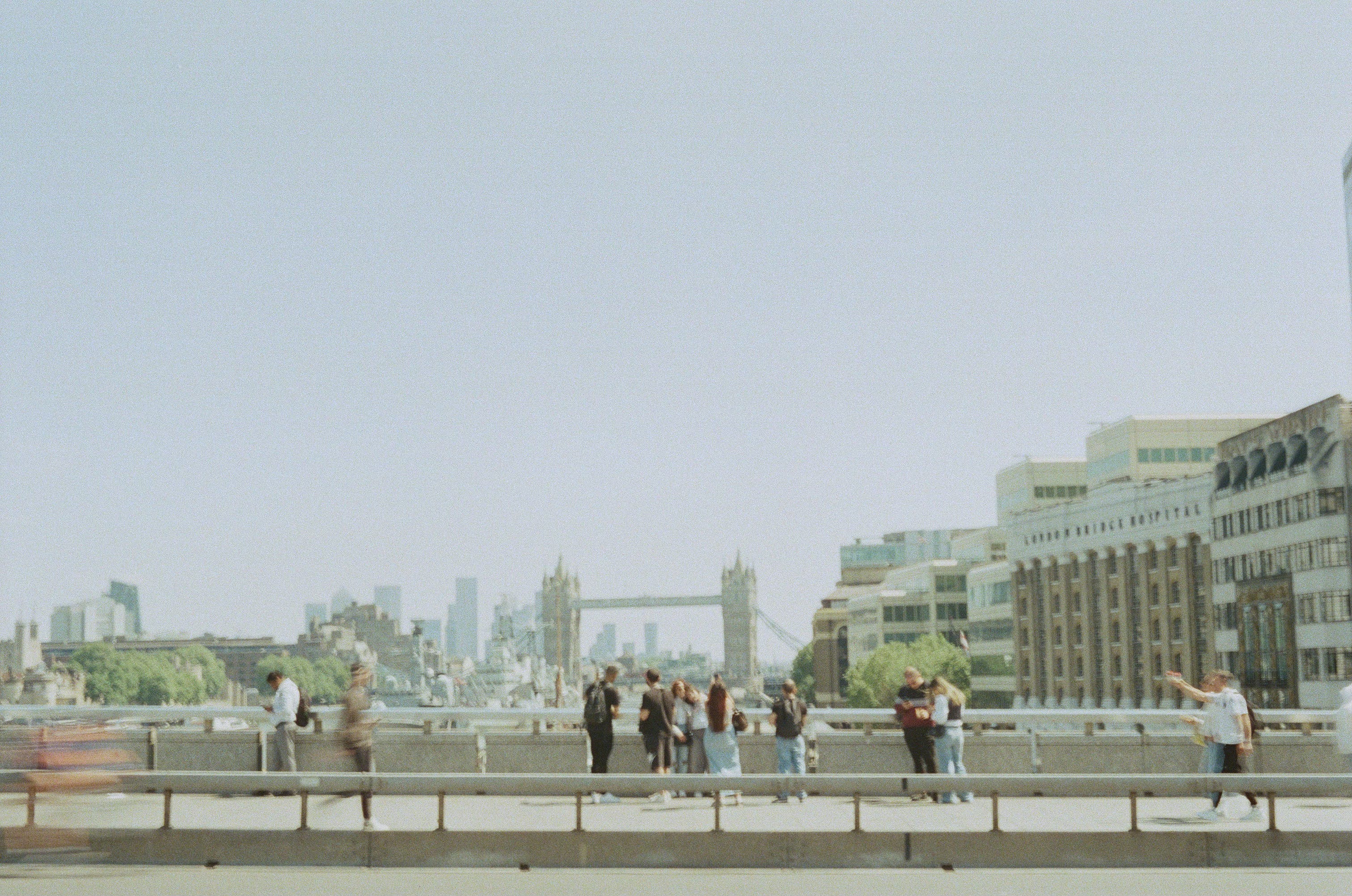
It appears that, like Rome before it and New York after, London has certainly had its a day. Like any good dog, it may just have had two days, and so did I. Since arriving in the late morning on Wednesday, I had walked London Bridge and saw the Shard, shopped in Southbank and saw a movie in the Prince Charles, explored Parliament and Buckingham Palace, nosed around the National Gallery and the British Museum, before finding my way to Euston and back to Liverpool in time for Thursday night.
Not bad for an ant.
banging article
great read, I thoroughly enjoyed it! though towards the end, when you touched upon immigration, I think you've been far more sympathetic towards the anti-immigration crowd than they deserve